There’s a unique charm to an automatic watch. It’s a marvel of miniature engineering, powered by the subtle movements of your wrist, a testament to timeless craftsmanship. But what happens when that exquisite timepiece isn’t adorning your wrist? It eventually stops, and the joy of picking it up can quickly turn into the chore of resetting the time, date, and any other intricate complications. This is precisely where an Auto Watch Winder Box steps in, transforming a potential hassle into seamless elegance.
An auto watch winder box isn’t just a fancy display case; it’s a dedicated device designed to keep your automatic watches fully wound and perfectly on time, even when you’re not wearing them. Think of it as a silent, diligent companion, constantly mimicking the natural motion of your wrist to ensure your mechanical masterpiece is always ready for its next appearance.
What Exactly is an Auto Watch Winder Box and Why Do You Need One?
At its core, an auto watch winder box is a sophisticated device that gently rotates your automatic (self-winding) timepiece. Unlike quartz watches that run on batteries or manual-wind watches that require daily hand-winding, automatic watches rely on kinetic energy – the movement of your wrist – to power their mainspring. When an automatic watch sits idle for too long, its power reserve depletes, and the watch stops. That’s where the winder comes in.
“Many collectors initially see a watch winder as a luxury, but it quickly becomes an indispensable tool,” says Horatio Gears, a seasoned horology expert. “It’s about maintaining the health and readiness of your investment.”
But why do you need one? Imagine owning a beautiful car that you only drive once a month. To keep it in pristine condition, you’d likely ensure the battery is charged and the fluids are circulating. An automatic watch is no different. When it stops, not only do you lose the correct time, but the delicate lubricants within its intricate mechanism can settle and dry out. This can lead to increased friction and premature wear over time, potentially necessitating costly servicing. An auto watch winder box prevents this by keeping the watch’s movement active, ensuring those vital lubricants remain distributed and the watch stays in optimal working order.
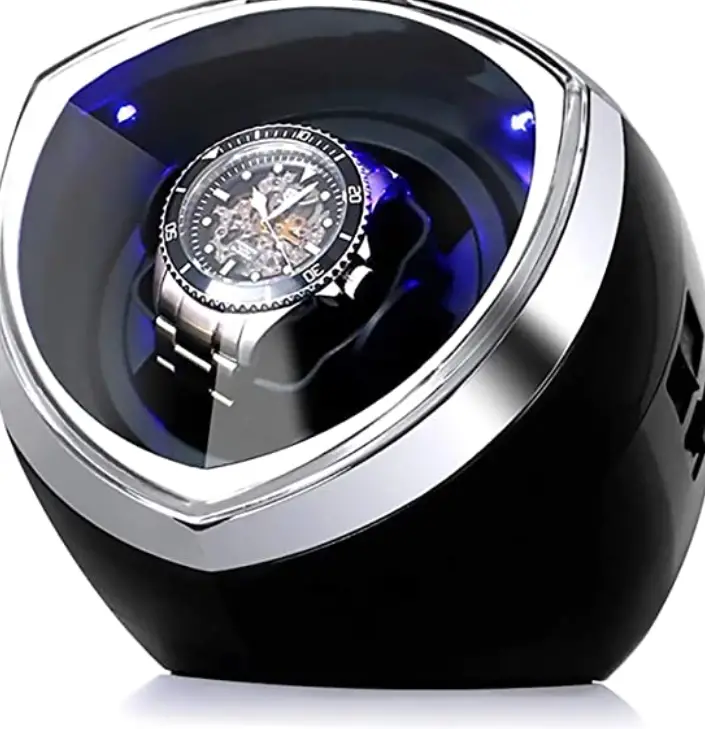
The Undeniable Benefits of Embracing an Auto Watch Winder Box
Beyond the sheer convenience, an auto watch winder box offers several compelling advantages for any automatic watch owner:
- Keeps Time and Complications Accurate: This is perhaps the most obvious benefit. For watches with date, day, moon phase, or perpetual calendar complications, resetting them can be a tedious and time-consuming task. A winder ensures your watch is always displaying the correct time and date, ready to be strapped on without a second thought.
- Preserves Internal Lubricants and Extends Watch Life: As mentioned, maintaining the flow of lubricants is crucial. An auto watch winder box ensures the oils within your watch’s movement remain evenly distributed, preventing them from congealing or drying out. This consistent movement helps reduce wear on gears and components, potentially extending the intervals between professional services and prolonging your watch’s overall lifespan.
- Reduces Crown Wear: Manually winding and setting a stopped watch involves repeatedly pulling out, rotating, and pushing in the crown. Over time, this can cause wear on the crown’s gaskets and stem, compromising water resistance and the overall integrity of the watch. A winder minimizes this interaction, protecting these critical components.
- Convenience and Ready-to-Wear Status: With an auto watch winder box, your watch collection is always ready to go. No more scrambling to set the time when you’re in a hurry. Just grab your favorite piece, put it on, and head out the door. It makes rotating your collection a true pleasure.
- Elegant Display and Storage: Many watch winders are designed to be as aesthetically pleasing as the watches they house. Crafted from fine woods, luxurious leathers, or modern materials, they serve as elegant display cases that showcase your collection while keeping it safe from dust and potential damage.
Unpacking the Different Types of Auto Watch Winder Boxes
The world of auto watch winder box options is diverse, catering to every collector’s need and aesthetic preference. Understanding the variations can help you make an informed choice.
Capacity
- Single Watch Winders: Perfect for those with one primary automatic watch or a small collection.
- Double Watch Winders: Ideal for couples or collectors who regularly rotate between two favorites.
- Multi-Watch Winders (Quad, 6-Piece, 8+ Piece): Designed for serious collectors with extensive automatic watch arsenals, often featuring individual controls for each winding module.
Power Source
Most winders are AC powered, ensuring consistent operation. However, some compact or travel-friendly models also offer battery power for greater flexibility in placement.
Motor Types
The heart of an auto watch winder box is its motor. High-quality winders often feature Japanese Mabuchi motors or similar precision-engineered motors, renowned for their silent operation and longevity. A quiet motor is essential, especially if the winder will be located in a bedroom or office environment.
Materials and Aesthetics
Winders come in a vast array of finishes and materials, designed to complement your personal style and home decor. Common choices include:
- Fine Woods: Such as ebony, walnut, cherry, or bamboo, often with high-gloss lacquer finishes.
- Luxurious Leathers: PU leather or genuine leather, in various colors and textures.
- Modern Composites: Like carbon fiber, offering a sleek, contemporary look.
- Glass or Acrylic Lids: To protect your watches while offering a clear view.
Advanced Features
Premium auto watch winder box models might include:
- Touchscreens or Digital Displays: For easy programming and monitoring.
- Individual Rotor Control: Allowing you to set specific TPD and direction for each watch.
- LED Interior Lighting: To elegantly illuminate your timepieces.
- Lockable Glass Fronts: For added security and protection.
- Extra Storage Compartments: For additional watches or accessories.
How to Master Choosing the Perfect Auto Watch Winder Box
Selecting the right auto watch winder box involves more than just picking one that looks good. It requires a bit of research to ensure it perfectly matches your watches’ needs.
Understanding TPD (Turns Per Day) and Winding Direction
Every automatic watch movement has specific winding requirements: the number of Turns Per Day (TPD) and the direction of rotation (clockwise (CW), counter-clockwise (CCW), or bi-directional).
“Getting the TPD and direction right is paramount,” advises Mr. Gears. “Too few turns, and your watch stops; too many, while not damaging, is simply unnecessary.” Most modern watches require between 650 and 950 TPD, often bi-directional. Check your watch’s manual or consult online databases (many winder manufacturers provide these) for your specific watch movement.
Matching the Winder to Your Watch’s Needs
- TPD and Direction Settings: Ensure the winder you choose offers the specific TPD and directional settings required by your watches. Many quality winders offer multiple program modes.
- Cuff Size and Watch Weight: Verify that the winder’s cuffs can comfortably accommodate your watches, especially larger or heavier pieces, and hold them securely without scratching.
Considering Capacity for Your Collection
Think about your current collection and any future additions. A single winder is fine if you only have one automatic, but if you have multiple or plan to grow your collection, a multi-watch winder might be a more cost-effective and convenient long-term solution.
Noise Level
This is a frequently overlooked factor. If your auto watch winder box will be in a bedroom, office, or quiet living space, a virtually silent motor (like those found in many Japanese-made units) is a must.
Design and Build Quality
A winder is often a visible accessory. Choose a design that complements your decor and a build quality that reflects the value of the watches it protects. Look for sturdy construction, quality hinges, and a well-finished interior.
Budget vs. Features
Watch winders range from affordable entry-level models to luxurious, high-tech units. Determine your budget, prioritize the features most important to you, and seek out the best value within that range. Remember, a reliable winder is an investment in your watches’ longevity.
Step-by-Step: Using Your Auto Watch Winder Box Correctly
Using an auto watch winder box is straightforward, but a few key steps ensure optimal performance and care for your timepiece.
- Initial Winding (If Watch Stopped): If your automatic watch has completely stopped, manually wind it using the crown until it starts running and has a sufficient power reserve. You cannot place a stopped watch directly into a winder and expect it to fully wind it from scratch. The winder is designed to maintain the power reserve, not to build it from zero.
- Securing the Watch: Most winders come with soft, adjustable cushions or cuffs. Gently fit your watch onto the cushion, ensuring it’s snug but not overly tight. The watch should sit securely and be balanced when placed in the winder’s rotor.
- Setting TPD and Direction: Refer to your watch’s specifications or an online TPD database to determine the correct Turns Per Day and winding direction (CW, CCW, or bi-directional). Select the corresponding program on your auto watch winder box. If you’re unsure, starting with a bi-directional setting at a lower TPD (e.g., 650-800 TPD) is often a safe bet, and you can adjust if the watch gains or loses time.
- Placement and Power: Place the winder on a stable, flat surface, away from direct sunlight, extreme temperatures, or strong magnetic fields. Connect it to a power source (AC adapter or install fresh batteries).
- Observe and Adjust: After a few days, observe your watch’s timekeeping. If it’s consistently losing time or stopping, you may need to increase the TPD setting or try a different winding direction. If it’s running too fast, it’s likely a watch regulation issue rather than a winder problem, as modern automatics cannot be overwound.
Nurturing Your Investment: Maintenance Tips for Your Auto Watch Winder Box
Just as your automatic watches require care, so does your auto watch winder box. A little attention ensures it continues to perform its vital role for years to come.
- Cleaning the Exterior: Regularly wipe down the exterior with a soft, dry, lint-free cloth to remove dust and fingerprints. For lacquered or polished surfaces, a slightly damp cloth followed by a dry polish can restore its shine. Avoid harsh chemical cleaners, which can damage finishes.
- Protecting from Elements: Keep your winder away from direct sunlight, which can fade finishes and potentially affect the internal components. Avoid placing it in areas of high humidity or extreme temperature fluctuations.
- Battery Replacement (If Applicable): If your winder uses batteries, replace them promptly when they run low to ensure uninterrupted operation. Always use the type and voltage recommended by the manufacturer.
- Regular Inspection: Periodically check the cuffs and cushions for any signs of wear or degradation. Ensure the rotors spin smoothly and silently.
- Professional Service: While uncommon, if your winder develops a persistent issue (e.g., motor noise, inconsistent rotation), consult the manufacturer’s support or a specialized repair service.
Debunking Common Myths About the Auto Watch Winder Box
There are several misconceptions surrounding watch winders that often deter potential users. Let’s set the record straight:
Myth 1: Overwinding is a risk.
This is perhaps the most persistent myth. Modern automatic watches are designed with a slipping bridle or clutch mechanism in the mainspring. Once the mainspring is fully wound, this mechanism allows excess tension to simply “slip” without further tightening the spring. Therefore, it is impossible to overwind an automatic watch using an auto watch winder box, or even by wearing it excessively. Your watch is safe.
Myth 2: It wears out your watch faster.
Some argue that keeping a watch constantly running on a winder leads to accelerated wear on its internal components. While it’s true that moving parts experience wear, modern, quality watch winders are designed with intermittent rotation cycles and specific TPD settings to mimic real-world wear patterns. They do not run 24/7 constantly spinning. “A well-regulated automatic watch, properly lubricated and kept running, is often healthier than one left dormant for extended periods,” states Mr. Gears. “The lubricants are meant to circulate.” Leaving a watch stopped for months can lead to dried-out oils, which can be far more detrimental than continuous, gentle motion.
Myth 3: They’re only for expensive watches.
While luxury watch owners frequently use them, an auto watch winder box is beneficial for any automatic watch. The principles of lubrication, convenience, and complication maintenance apply regardless of a watch’s price point.
Myth 4: They’re just fancy boxes.
As we’ve explored, winders offer tangible functional benefits for automatic watches, extending their life and enhancing the ownership experience. Their aesthetic appeal is a bonus, not their sole purpose.
Frequently Asked Questions (FAQ) About Auto Watch Winder Boxes
Q: Is an auto watch winder box truly necessary?
A: While not strictly “necessary” if you wear your automatic watch daily, it becomes highly beneficial if you own multiple automatic watches, don’t wear a particular watch often, or have watches with complex complications that are time-consuming to reset. It helps preserve the watch’s internal health and offers immense convenience.
Q: How do I find the correct TPD for my watch?
A: The best source is your watch’s manufacturer manual. Many high-quality auto watch winder box brands also provide extensive online databases of TPD and winding direction requirements for various watch movements. As a general rule, most modern automatics require 650-950 TPD and are bi-directional.
Q: Can I put a quartz watch in an auto watch winder box?
A: No, a quartz watch is battery-powered and does not have a self-winding mechanism. Placing it in a winder would be pointless and potentially harmful to the winder’s motor due to unnecessary rotation. Watch winders are exclusively for automatic (self-winding) mechanical watches.
Q: How long should my watch stay on the winder?
A: A well-programmed auto watch winder box will typically run for a period, then rest, repeating the cycle over 24 hours to maintain the full power reserve. You can keep your watch on the winder indefinitely if it’s set correctly. Some collectors like to let their watches rest off the winder for 12-24 hours periodically, but this is a matter of personal preference rather than a strict requirement to prevent overwinding.
Q: What’s the difference between uni-directional and bi-directional winding?
A: Uni-directional winding means the winder rotates in only one direction (either clockwise or counter-clockwise) to wind the watch. Bi-directional winding means the winder alternates rotation directions, which is suitable for most modern automatic movements that wind in both directions. Your watch’s movement dictates which mode is appropriate.
Conclusion
An auto watch winder box is more than a mere accessory; it’s an essential tool for any discerning owner of automatic timepieces. It offers unparalleled convenience, ensuring your cherished watches are always accurate and ready to wear. More importantly, it acts as a safeguard, protecting the intricate mechanics and vital lubricants within, thereby extending the life and preserving the value of your investment. By understanding how these clever devices work and choosing the right one for your collection, you unlock a new level of appreciation and effortless enjoyment for your automatic watches. Embrace the simplicity and sophistication an auto watch winder box brings, and let your timepieces perform at their very best, always.