Ever wondered if that elegant automatic watch on your dresser needs a little more than just a quiet rest? If you own a self-winding timepiece, a Mechanical Watch Winder isn’t just a luxury; it’s a smart investment in the longevity and precision of your cherished companion. Let’s dive deep into the world of mechanical watch winders and discover why they’re essential for any true horology enthusiast.
What Exactly is a Mechanical Watch Winder and Why Do You Need One?
Imagine your wrist, constantly in motion, providing the subtle energy needed to power your automatic watch. A mechanical watch winder is essentially a sophisticated device designed to mimic that natural movement. It gently rotates your automatic watch when it’s not being worn, ensuring the mainspring remains wound and the intricate internal mechanisms stay in perfect working order.
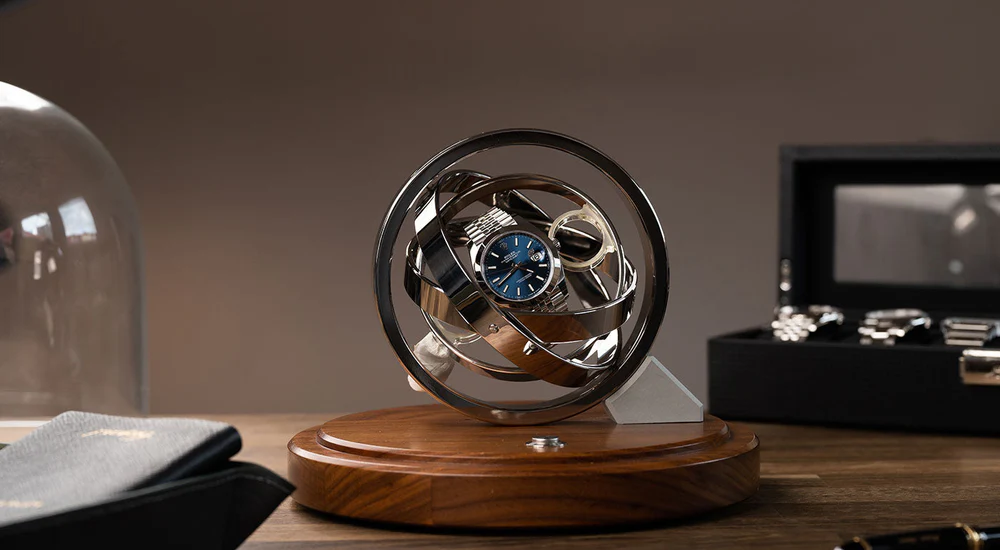
You see, automatic watches, unlike their quartz counterparts, are powered by the kinetic energy generated by your body’s movements. Inside, a weighted rotor spins, winding the mainspring as you go about your day. But what happens when you take it off for a few days, or if you have a collection of several watches you rotate through? Your watch will stop, and with it, any date, day, or moon phase complications will fall out of sync. This is where a mechanical watch winder steps in, acting as a surrogate wrist, keeping your timepiece ticking accurately and always ready to wear.
The Undeniable Benefits of Using a Watch Winder
Beyond the sheer convenience, there are several compelling reasons why a mechanical watch winder is a must-have for any automatic watch owner.
Firstly, a winder keeps your watches running accurately. When an automatic watch stops, its calendar and time settings need to be manually reset. For watches with complex complications like perpetual calendars or moon phases, this can be a fiddly and time-consuming process. A winder ensures your watch is always displaying the correct time and date, right when you pick it up.
Secondly, and perhaps most crucially, it helps maintain the health of your watch’s internal lubricants. Mechanical watches are delicate machines, filled with tiny gears and springs that rely on precise lubrication. If a watch remains stationary for extended periods, these lubricants can settle or even dry out, leading to increased friction and potential wear on the components. By keeping the watch subtly moving, a winder helps to evenly distribute these vital oils, contributing to the watch’s overall longevity and consistent performance.
Finally, for collectors, a watch winder offers an elegant way to display your timepieces while ensuring they’re always in prime condition. No more fumbling with crowns or resetting complications every time you switch watches. It’s a seamless blend of practicality and presentation.
Exploring the Different Types of Mechanical Watch Winders
The world of mechanical watch winders is as diverse as the watches they serve. You’ll find options ranging from sleek single-watch units to elaborate multi-watch cabinets designed for serious collectors.
One key differentiator is capacity: do you need a winder for one watch, two, four, or even more? Then there are the rotation settings. Most quality winders offer adjustable Turns Per Day (TPD) settings and selectable rotation directions (clockwise, counter-clockwise, or bi-directional). These settings are crucial because different watch movements have specific winding requirements. Modern winders often include “rest cycles” that simulate natural wrist movement, ensuring the watch isn’t constantly winding.
You’ll also notice variations in materials and aesthetics, from luxurious wood finishes to contemporary carbon fiber and leather, designed to complement any interior. Furthermore, motor quality is paramount. Look for winders that feature quiet, long-lasting motors – Mabuchi motors are a well-regarded choice – and are guaranteed not to magnetize your timepiece. Some winders also offer dual power options, using both mains electricity and batteries for flexibility.
How to Choose the Perfect Mechanical Watch Winder for Your Timepiece
Selecting the right mechanical watch winder requires a bit of homework, but it’s well worth the effort to protect your investment.
The most critical factor is compatibility. You need to match the winder’s TPD (Turns Per Day) and rotation direction to your specific watch’s movement. This information can usually be found in your watch’s manual or on the manufacturer’s website. For instance, many common movements might require around 650-850 TPD, often bi-directional. Using incorrect settings can lead to your watch stopping or, in rare cases with older winders, overwinding (though modern winders are typically designed to prevent this).
Next, consider the capacity you need. If you only have one automatic watch, a single winder is fine. For a growing collection, a multi-watch winder offers a scalable solution. Noise level is another practical consideration; if the winder will be in your bedroom or office, a silent-operating model is highly recommended.
Finally, think about build quality, aesthetics, and your budget. A high-quality winder from a reputable brand like Wolf, Rapport, or SwissKubiK will offer superior reliability and protection for your watches. Don’t compromise on quality with cheap, unbranded winders, as poor motors can potentially harm your watch.
Setting Up Your Mechanical Watch Winder for Optimal Performance
Setting up your mechanical watch winder correctly ensures its optimal function and the longevity of your timepiece. It’s a straightforward process, but attention to detail makes all the difference.
- Manually Wind Your Watch First: Before placing your watch in the winder, give it a full manual wind (usually about 30-40 turns of the crown) to ensure it has enough power reserve to begin with. This prevents the winder from working harder than necessary.
- Place the Watch Securely: Carefully remove the watch holder or cushion from the winder. Gently place your watch around it, ensuring it fits snugly but not too tightly. The watch should be stable and not prone to slipping.
- Insert the Watch into the Winder: Once your watch is securely on its cushion, reinsert the cushion back into the winder’s slot. Make sure it clicks into place if applicable.
- Adjust TPD Settings: Consult your watch’s manual to find its specific Turns Per Day (TPD) requirement. Set your winder to this TPD. Most quality winders offer a range of settings, from 650 to over 1000 TPD.
- Select Rotation Direction: Determine if your watch winds clockwise, counter-clockwise, or bi-directionally. Adjust the winder’s settings accordingly. Many watches can wind in both directions, making bi-directional a safe choice if you’re unsure.
- Power On: Connect the winder to its power source and turn it on. The winder will begin its programmed rotation cycles.
- Monitor Periodically: While the winder does its job, it’s wise to periodically check your watch’s accuracy and ensure it’s functioning as expected.
Tips for Maintaining and Caring for Your Mechanical Watch Winder
Caring for your mechanical watch winder is simple but essential to ensure its long-term performance and preserve its aesthetic appeal.
Regularly clean the exterior with a soft, dry cloth to remove dust and fingerprints. For surfaces like wood or leather, follow the manufacturer’s specific cleaning recommendations. Avoid harsh chemicals or abrasive materials that could damage the finish.
If your winder is battery-powered, check and replace batteries as needed to prevent power interruptions. For mains-powered units, ensure the power cord is not strained or damaged.
Placement matters. Keep your winder away from direct sunlight, extreme temperatures, and high humidity, which can affect both the winder and your watches. Avoid placing it near strong magnetic fields, although reputable winders are typically designed with anti-magnetism in mind. By following these simple tips, your mechanical watch winder will continue to serve your timepieces flawlessly for years to come.
Common Misconceptions About Mechanical Watch Winders Debunked
There’s a lot of chatter around mechanical watch winders, and some common myths often lead to confusion. Let’s set the record straight.
“Watch winders are bad for your watch and cause unnecessary wear.” This is a frequently heard concern, but it’s largely a misconception. A properly chosen and correctly set mechanical watch winder, used within its recommended TPD and direction, will not cause excessive wear. In fact, by keeping lubricants evenly distributed and preventing frequent manual winding (which can stress the crown and stem), a winder can actually contribute to the watch’s longevity. As watch expert Dr. Evelyn Harding states, “A well-regulated watch winder simply simulates the natural motion of the wrist, a movement your watch is designed to endure consistently.”
“Watch winders only prevent wear; they don’t actually keep your watch accurate.” While preventing wear is a huge benefit, a primary function of a winder is to keep your watch running, thus maintaining its accuracy. If your watch has a perpetual calendar, moon phase, or GMT complication, a winder means you never have to painstakingly reset these features.
“Watch winders are only for expensive luxury watches.” Not at all! Any automatic watch, regardless of its price point, can benefit from a winder. The mechanics are the same; they all rely on kinetic energy and can suffer from lubricant settling if left unworn.
“Watch winders will overwind your watch.” Modern, good-quality mechanical watch winders are designed with intelligent programs that include rest periods. They don’t continuously wind the watch; instead, they operate in cycles to mimic natural wear and prevent overwinding, which could potentially damage the mainspring. Look for winders that specify these programmable settings.
Frequently Asked Questions About Mechanical Watch Winders
Q: How often should I use my mechanical watch winder?
A: You should use your watch winder whenever you’re not wearing your automatic watch, especially if you won’t be wearing it for more than its power reserve (typically 40-80 hours). This ensures it remains wound and accurate.
Q: Can I put any automatic watch in a winder?
A: Yes, generally any automatic watch can be placed in a winder. However, it’s crucial to know your specific watch’s TPD and rotation direction requirements to set the winder correctly for optimal performance.
Q: What does TPD mean, and why is it important?
A: TPD stands for “Turns Per Day.” It refers to the number of full rotations a winder makes in 24 hours. TPD is vital because different watch movements require a specific number of turns to remain fully wound without being over-stressed.
Q: Is it okay to leave my watch in a winder permanently?
A: Yes, if your winder is of good quality and correctly set to your watch’s specifications, it’s perfectly fine to leave your watch in it permanently. Quality winders simulate natural wrist motion with programmed rest periods to prevent any potential wear.
Q: Do manual wind watches need a winder?
A: No, manual wind watches do not need a winder. These watches are designed to be wound by hand, typically daily, and do not have the self-winding rotor mechanism that mechanical winders cater to.
Conclusion
A mechanical watch winder is far more than a simple accessory; it’s a dedicated guardian of your automatic timepieces. By continuously providing the gentle, consistent motion these intricate machines require, a winder ensures your watches remain accurate, their delicate movements are properly lubricated, and they are always ready for your wrist. It respects the craftsmanship and engineering that goes into every mechanical watch, transforming a potential hassle into a seamless experience. Investing in a quality mechanical watch winder isn’t just about convenience; it’s about preserving the art and precision of horology itself. So, give your automatic watches the care they deserve, and let a mechanical watch winder keep them ticking perfectly for years to come.