For anyone who treasures their automatic watch and frequently finds themselves on the move, a Travel Watch Winder isn’t just a luxury; it’s a smart investment. Imagine landing after a long flight, eager to wear your favorite self-winding timepiece, only to find it stopped and needing a full reset. A travel watch winder prevents this hassle, ensuring your watch is always ready to grace your wrist, perfectly wound and accurate, no matter where your adventures take you. This guide will walk you through everything you need to know about these essential accessories, from understanding their core function to choosing the ideal one for your globetrotting lifestyle.
What is a Travel Watch Winder and Why Do You Need One?
At its core, a travel watch winder is a device designed to keep automatic mechanical watches running when not being worn. Unlike quartz watches that rely on a battery, automatic watches are powered by the motion of your wrist. When left unworn for an extended period, they will eventually stop. A winder simulates this wrist movement, keeping the mainspring tensioned and the watch ticking.
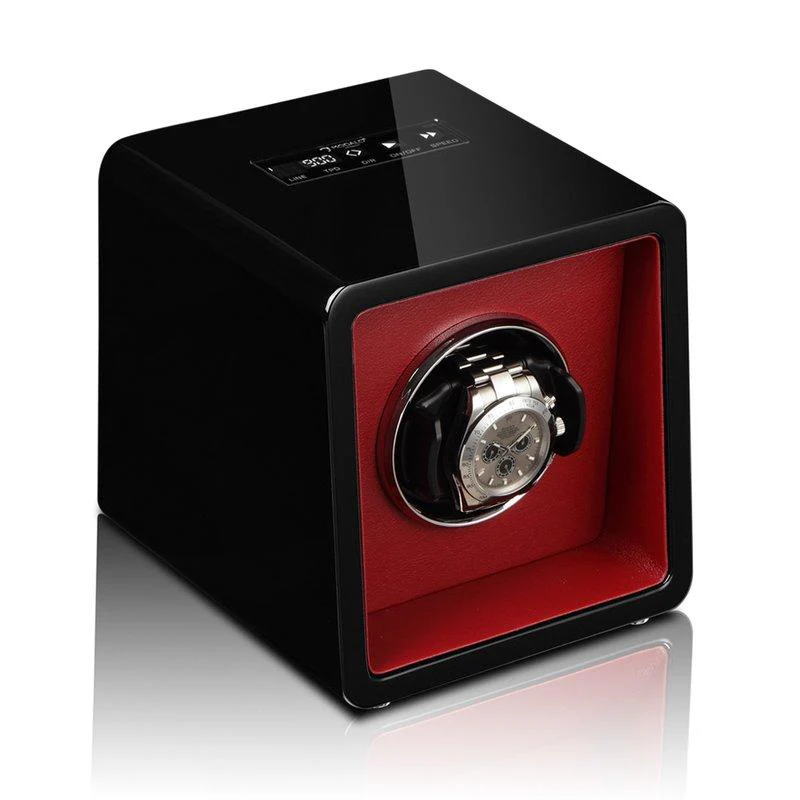
So, why specifically a travel watch winder? The answer lies in portability and convenience. These specialized winders are built with travel in mind – compact, often battery-powered or USB-charged, and designed to protect your valuable timepiece while it’s in transit. They save you the time and effort of constantly resetting the time, date, moon phase, or other complex complications on your watch, which can be particularly cumbersome after long periods of non-wear. For serious collectors or busy professionals, the peace of mind offered by a reliable travel watch winder is invaluable.
The Undeniable Benefits of Using a Travel Watch Winder
Using a travel watch winder offers a host of advantages that go beyond mere convenience. It’s about preserving the integrity and longevity of your cherished automatic timepiece.
One primary benefit is maintaining accuracy. Automatic watches are precision instruments that perform best when kept running. When a watch stops, its lubricants can settle, potentially affecting the accuracy and smooth operation of the intricate gears and springs. Keeping it wound ensures these tiny components stay in motion, much like a well-oiled machine.
Furthermore, a winder preserves the watch’s health. The oils and lubricants within an automatic movement are designed to function when the watch is in motion. Frequent starting and stopping can put undue stress on the movement and cause the lubricants to dry out or redistribute unevenly, potentially leading to increased wear over time. “Just like a high-performance car, an automatic watch benefits immensely from continuous, gentle operation,” explains Dr. Evelyn Reed, a renowned horology specialist. “A quality travel watch winder ensures its delicate mechanics remain in optimal working condition, even when you’re thousands of miles away from home.”
Beyond the technical aspects, there’s the sheer convenience factor. Imagine stepping off a transatlantic flight and immediately having your watch displaying the correct time and date, without any need for winding or resetting. This is especially true for watches with complex complications like perpetual calendars or moon phases, which can be time-consuming to re-adjust. A travel watch winder eliminates this ritual, leaving you more time to enjoy your destination. Lastly, many travel winders double as protective cases, safeguarding your watch from bumps, scratches, and dust during transit.
Exploring the World of Travel Watch Winder Types
The market for travel watch winders is diverse, catering to various needs and preferences. Understanding the different types can help you pinpoint the best fit for your travel habits and watch collection.
- Single Watch Winders: These are the most common and often the most compact. Designed for one watch, they are perfect for individuals who typically travel with a single automatic timepiece. Their small footprint makes them easy to pack into a carry-on or even a briefcase.
- Dual Watch Winders: For those who like to travel with a choice of two automatic watches, a dual winder is an excellent option. While slightly larger, they still prioritize portability and often offer independent winding settings for each watch.
- Integrated Travel Cases: Some high-end options combine the functionality of a watch winder with a robust travel case, often featuring additional compartments for cufflinks, spare straps, or other small accessories. These offer superior protection and organization but tend to be bulkier.
When considering types, also pay attention to materials and build quality. Look for durable exteriors (leather, carbon fiber, robust plastics) that can withstand the rigors of travel, and soft interior linings (velvet, microsuede) to protect your watch from scratches.
How to Choose the Perfect Travel Watch Winder for Your Journeys
Selecting the right travel watch winder involves balancing functionality, portability, and your specific watch’s needs. Here are key factors to consider:
- Power Source: This is crucial for travel. Many travel winders offer dual power options:
- Battery-powered: Ideal for true portability and situations where outlets are scarce. Look for long battery life.
- USB-powered: Increasingly popular, allowing you to charge from laptops, power banks, or standard USB wall adapters.
- AC Adapter: Standard for home use, but less convenient on the go unless you have access to power.
Choose a model that aligns with your typical travel scenarios.
- TPD (Turns Per Day) & Rotation Settings: Different automatic watch movements require a specific number of turns per day and rotation direction (clockwise, counter-clockwise, or bi-directional) to stay optimally wound. Research your watch’s specific requirements (often found in its manual or online) and ensure the winder offers compatible settings. “Choosing the correct TPD and rotation direction is paramount,” advises Dr. Reed. “An incorrect setting can either under-wind your watch, leaving it stopped, or needlessly cycle the movement without added benefit.”
- Size and Portability: Since it’s for travel, prioritize compactness and lightweight design. Consider how it will fit into your luggage without adding significant bulk or weight.
- Noise Level: A silent motor is a game-changer, especially if you plan to keep the winder in your hotel room, shared accommodation, or even on a nightstand. Look for descriptions like “ultra-quiet” or “Japanese motor.”
- Security and Protection: Does the winder come with a secure clasp or cover? Is the interior padded adequately to prevent your watch from moving or getting scratched during transit? These details contribute to peace of mind.
- Budget: Travel watch winders come in a wide price range. Determine your budget, but remember that investing in a quality winder is an investment in the longevity and performance of your watch.
Mastering Your Travel Watch Winder: A Quick-Start Guide
Using a travel watch winder is straightforward, but a few simple steps ensure optimal performance and care for your timepiece.
- Research Your Watch’s Requirements: Before anything else, find out the recommended TPD (Turns Per Day) and rotation direction for your specific automatic watch model. This information is usually in the watch’s manual or readily available online.
- Prepare the Winder: If battery-powered, ensure fresh batteries are installed. If USB or AC powered, connect it to a power source.
- Place Your Watch Securely: Gently place your watch onto the winder’s cushion or holder. Ensure it fits snugly but without excessive pressure. Most cushions are designed to be compressible to accommodate various wrist sizes. The watch should be securely positioned so it won’t fall off during rotation.
- Set TPD and Rotation Mode: Configure the winder’s settings according to your watch’s requirements. Most quality travel winders offer multiple TPD settings and options for clockwise, counter-clockwise, or bi-directional rotation.
- Activate and Observe: Turn on the winder and observe its operation for a few cycles. Confirm that it’s rotating smoothly and your watch remains secure. Many winders operate with intermittent cycles (e.g., rotate for X minutes, rest for Y minutes) to prevent overwinding and mimic natural wrist movement.
By following these steps, your watch will stay wound, accurate, and ready for your next adventure.
Essential Tips for Travel Watch Winder Maintenance and Care
Just like your watch, your travel watch winder benefits from proper care to ensure its longevity and reliable performance.
- Regular Cleaning: Periodically wipe down the exterior of your winder with a soft, dry, lint-free cloth to remove dust and fingerprints. For tougher spots, a slightly damp cloth can be used, but avoid harsh chemicals or abrasive cleaners that could damage the finish.
- Battery Management: If your winder uses batteries, remove them if you don’t plan to use the winder for an extended period (several weeks or months). This prevents potential leakage that could damage the internal electronics. Always use high-quality batteries.
- Store Properly: When not in use, store your travel watch winder in a cool, dry place away from direct sunlight and extreme temperatures. If it comes with a protective pouch or box, use it.
- Handle with Care: While designed for travel, avoid dropping the winder or subjecting it to harsh impacts, as this could damage the motor or internal components.
- Check Watch Cushion: Ensure the watch cushion remains firm and continues to hold your watch securely. If it becomes loose or worn, it might be time to replace it to prevent your watch from shifting during rotation.
Debunking Common Myths About Travel Watch Winders
Despite their utility, travel watch winders are sometimes subject to misconceptions. Let’s set the record straight.
- Myth: Watch winders overwind your watch. This is a common concern, but modern watch winders are designed to prevent overwinding. Automatic watches have a slipping clutch mechanism that disengages once the mainspring is fully wound, preventing damage. Winders typically operate in cycles (e.g., rotating for a period, then resting), further reducing any theoretical risk.
- Myth: Travel watch winders are unnecessary. While you can manually wind your watch or wear it regularly, a winder offers significant convenience and contributes to the long-term health of the movement by keeping lubricants distributed. For travelers or those with multiple automatic watches, they are far from unnecessary.
- Myth: All watch winders are the same. Absolutely not. There’s a vast difference in quality, motor type, TPD settings, noise level, and build materials. A cheap, poorly designed winder could potentially do more harm than good, while a high-quality travel watch winder will be reliable, quiet, and gentle on your timepiece.
Frequently Asked Questions About Travel Watch Winders
Here are some common questions travelers have about these useful devices:
Q: Are travel watch winders allowed on planes?
A: Yes, in most cases, travel watch winders are allowed on planes, both in carry-on and checked luggage. If it contains batteries, it’s generally recommended to keep it in your carry-on luggage with the batteries installed, or removed if the airline advises it for safety reasons. Always check with your specific airline for their latest battery regulations.
Q: How long do batteries last in a travel watch winder?
A: Battery life varies significantly depending on the winder’s motor efficiency, battery type (e.g., AA, D, lithium-ion), and usage frequency. Some high-quality travel watch winders can run for several months on a single set of batteries, while others might require replacement every few weeks.
Q: Can I use a travel watch winder for any automatic watch?
A: Almost all automatic watches can be used with a winder. The key is to ensure the winder has the correct TPD (Turns Per Day) and rotation direction settings that match your specific watch movement’s requirements.
Q: What’s the ideal TPD for my watch?
A: The ideal TPD (Turns Per Day) is specific to your watch’s movement. Most watch manufacturers provide this information in the watch’s manual or on their website. Common TPD ranges are between 650 and 900, with bi-directional rotation often recommended.
Q: Are silent travel watch winders truly silent?
A: High-quality travel watch winders, especially those utilizing Japanese motors, are often described as “ultra-quiet” or “silent.” While no mechanical device is absolutely silent, these models produce a negligible amount of noise that is imperceptible in most environments, making them suitable for bedrooms or quiet spaces.
Conclusion
A travel watch winder is more than just a gadget; it’s an indispensable companion for any automatic watch owner with a penchant for travel. It safeguards your valuable timepiece, maintains its precision, and offers unparalleled convenience by ensuring your watch is always perfectly wound and ready to wear the moment you arrive. By understanding the types, choosing wisely based on your needs, and performing simple maintenance, you’ll extend the life and enhance the performance of your automatic watch for countless journeys to come. Invest in a quality travel watch winder today, and experience the effortless luxury of a ready-to-wear watch, no matter where your next adventure begins.